2024 has arguably been one of the hardest years of my life. I have loved and I have lost. I have completely shed who I once was and relearned all parts of myself over and over again.
I have been avoiding writing this blog post for many months. My literature professor made a remark about writing that has said with me all week.
She said, “The reason we must write out stories is because it is impossible to escape yourself while you are writing.”
So, here I am, no longer running away from topics or my thoughts that scare me. I am engaging in the very thing that founded Sarah and I’s friendship… vulnerability.
I lost my best friend on May 18th, 2024. It was six days after I turned 21. Grief can feel so utterly lonely. Although death is apart of life, it can feel as if you are the only one who is experiencing it. The first few days of grief are confusing. It’s a state of shock, so intense, that life almost feels normal. You are able to push it out of your mind for a couple of days and surround yourself with friends and family.
I think that grief is hardest when you arrive back at home. When the phone calls and constant concern stop. The first night you are alone and you mindlessly go to dial your best friend to tell her about the tragedy that was your weekend…. only to realize that the tragedy that occurred resulted in her not being on the other end of the phone.
I cannot recall many things from the first week of losing Sarah. I remember I lost my phone for four days and my parents had to come over to find me in the floor of my bedroom. I remember not being able to shower for days. I remember thinking that I could physically feel my heart breaking inside of my chest. Oh, and screaming, I remember a lot of screaming at God and the Universe or whoever you believe in. I was pissed.
Grief is messy and complex. Before I knew it, I had gone back to who I was before I had met Sarah. I didn’t know how to do life without her, so I resorted to the lost fifteen year old version of myself. I engaged in behaviors. I skipped breakfast and lunch without concern because my body felt so numb. I was isolated and didn’t rely on friends or family for support. Every emotional wall I had torn down was back up and stronger than ever. I wore black clothing on the days I could remember to change. I cried until my body felt as if there were no more tears left in my system.
Hint: There was always more tears.
Sarah and I met in treatment. She was my rock when recovery became hard. Sarah was my best friend. I used to say “an angel in human form sent for me” because that’s how she felt. Sarah had the most beautiful heart, a talented writer, selfless, funny, and is still the strongest human that I know. Sarah also struggled with addiction for many years of our friendship. Supporting her and loving her through her addiction/sobriety pushed me to work at Integrative Life Center. Integrative Life Center is a women’s mental health residential treatment center in Nashville Tennessee. I wanted to help women like myself and like Sarah.
Sarah’s funeral was beautiful. I stayed strong when family members and friends of her’s hugged me. Strangers who I didn’t know, but knew me and my connection to Sarah from the name alone. I am so honored to have been known by so many of those who loved Sarah. (it helps that we have the same name).
When Sarah passed, I took a leave of absence from work to properly grieve the loss of my best friend. I am extremely thankful to have parents who supported this decision. Grief came in many different forms throughout this time. It started out with fear. I was scared to allow myself to cry. I wanted to continue to choke tears back and avoid facing the reality of the loss I was experiencing. I learned that sometimes grief DEMANDS a break from responsibilities and I am extremely fortunate to have been given that opportunity.
Next, came the unbearable amounts of shame. The feeling of replaying every last interaction trying to look for a warning sign. It’s blaming yourself for not being psychic and knowing how they felt before they died. I have learned that shame serves a very necessary purpose when experiencing a trauma. Shame allows us to grab onto an ounce of control. Grief will strip you of your identity, your belief system, and make you feel as if every aspect of your life is completely out of your control. The shame will eventually subside. It takes time and it’s painful, but shame goes away when you begin to accept that maybe there wasn’t anything more that you could have done.
I write all of this to say that it gets better. Of course, I miss Sarah every single day. I don’t want that to ever go away and it won’t. But, I needed an article or a person to tell me that it does get better when I was experiencing pain that felt I couldn’t live through.
I have learned that grief never fully goes away. You learn to live with it and find space for it in your heart and in your day. Sarah will always have a “seat” at my table with all of my other loved ones. No one will ever take her place, but I don’t need to close my heart off to new relationships in order to keep her spot filled.
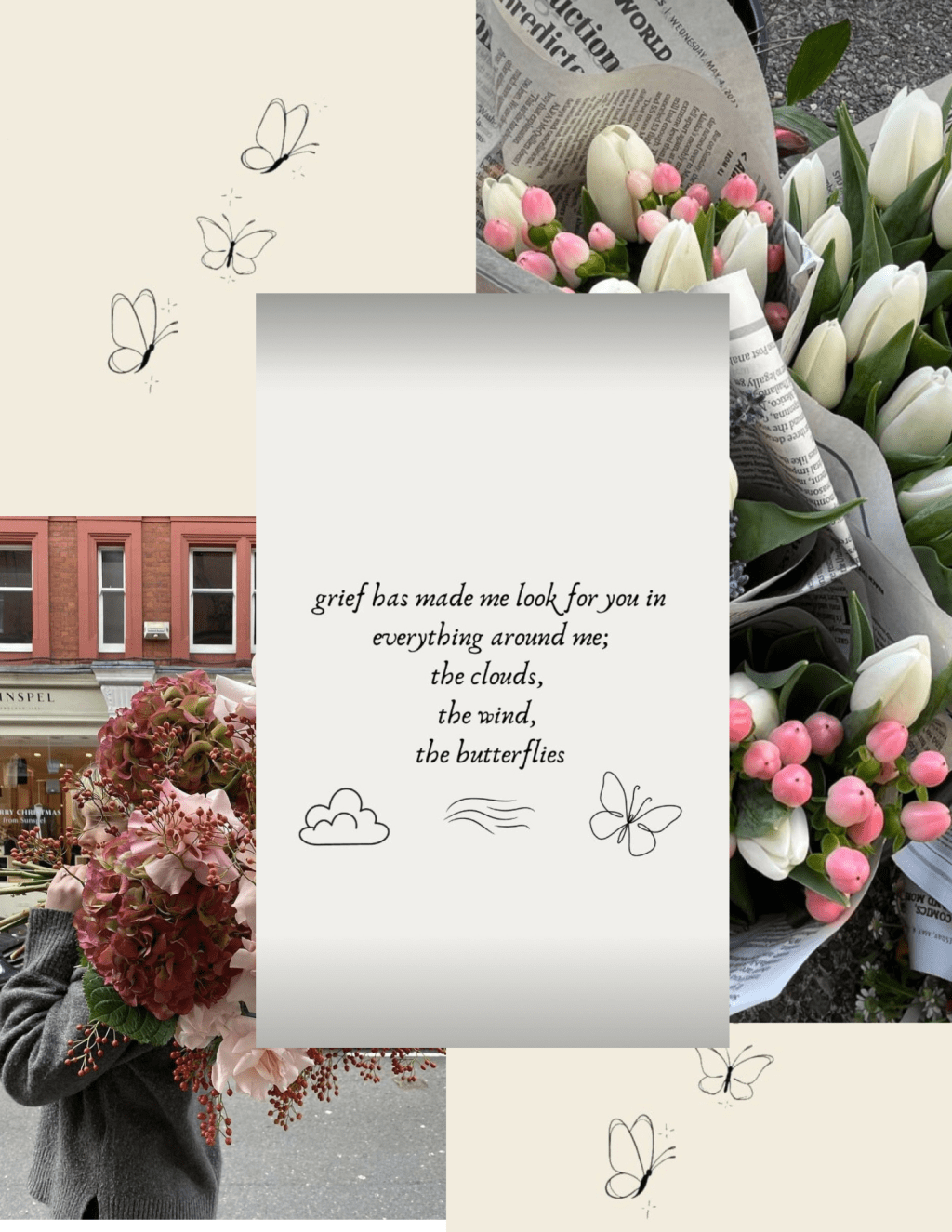
I still talk to Sarah everyday. I see her in everything. She’s in clients I meet at work, in butterflies around campus, and in new Lana Del Ray songs I know he would have loved. I wear the necklace I bought for her around my neck and have not taken it off since May. I keep in contact with her sister Shelby. Shelby gives me so much relief. She sounds so much like Sarah and at times, it catches me off guard when I can hear her laugh or responses that sound like I am on the phone with Sarah.
The point in writing this is to say that it does get better. Let yourself fully experience every ounce of emotion that comes with grief. It’s terrifying. Journal and write down everything. You are not alone and this too shall pass.
Love, Sara Posey
Resources:
988- Suicide Hotline (Available 24/7) (Call or Text)
Vanderbilt Psychiatric Hospital: 1211 Medical Center Drive, Nashville Tennessee, 37212
 sara posey.
Leave a comment